Nursery sleep guide
Choosing a Nursery Sleep Sack: Materials, Fit, and Safe Use
A sleep sack can add a wearable layer of warmth to a baby’s sleep routine without putting a loose blanket in the sleep space. The right choice is less about a plush feel or a pretty finish and more about breathable fabric, a secure fit, practical fastenings, and careful use. Here’s what to look for—and what to check before bedtime.
What a sleep sack does—and what it doesn’t
A nursery sleep sack, sometimes called a wearable blanket, is a garment designed to be worn over sleepwear. Unlike a blanket placed over a baby, it stays on the child while they move. For families building a simple bedtime routine, that can make it a useful clothing layer—provided it is the right size and used according to its instructions.
A sleep sack is not a mattress, a sleep positioner, or a substitute for a safe sleep space. It does not make an unsafe sleep setup safe, and it should never be used to restrict a baby’s movement or hold them in a particular position. The basics still matter: follow current guidance from a qualified health authority, place a baby on their back for sleep, and keep the sleep area clear of loose bedding and other soft items. If you have questions about your baby’s individual needs, ask their health care provider.
That distinction is important. A product may be described as cozy or comforting, but marketing language cannot establish that it is suitable for every baby or every room temperature. Think of a sleep sack as one part of the baby’s clothing—not as a solution to every sleep challenge.
Start with material: breathable, comfortable, and easy to care for
Fabric influences how a sleep sack feels against the skin, how it can be washed, and how it fits into everyday routines. There is no single fabric that is automatically best for every child. Consider the garment’s construction, the room, your baby’s usual sleepwear, and the care label together.
Organic cotton and cotton sateen
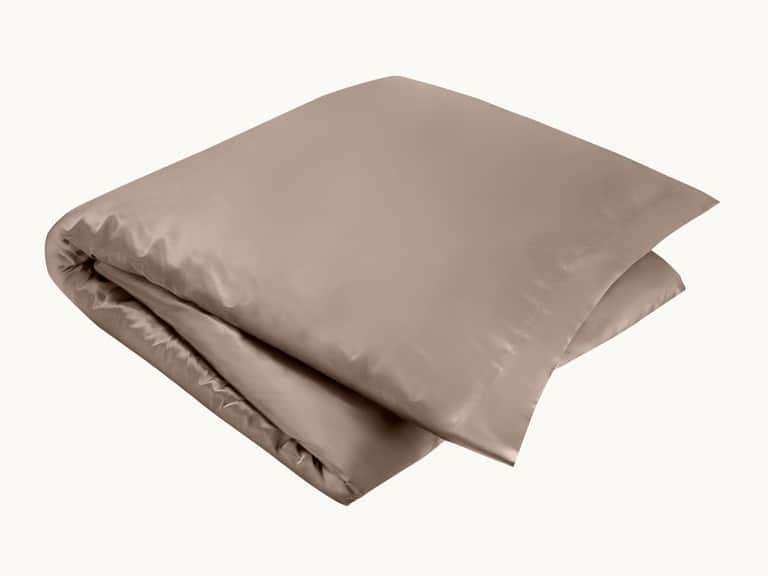
Cotton is a common option for baby sleepwear because it is familiar, soft, and available in different weights and weaves. Organic cotton sateen, for example, has a smooth surface and a subtle sheen. A tightly woven sateen can feel different from a lighter jersey knit, even when both are made of cotton, so check the description and feel of the fabric rather than relying on the fiber name alone.
“Organic” describes how a fiber was grown or processed under a particular standard; it does not, by itself, tell you whether a sleep sack is the right warmth, fit, or design for your child. Nor should it be treated as a guarantee that a child will not experience irritation. If your baby has sensitive skin or a known textile allergy, review the full fiber content and consult a health professional when appropriate.
Check the weight, not just the softness
Words such as lightweight, plush, and cozy can be subjective. Look for specific product information about fabric layers, filling, or a thermal rating if the manufacturer provides one. A sleep sack that is thicker or insulated can add more warmth than a thin, unlined style. Layering it over warm pajamas in a heated room may be too much, even if each item feels comfortable on its own.
Use the manufacturer’s guidance to understand a garment’s intended warmth, and take the room temperature and the baby’s clothing underneath into account. Babies should not be dressed so warmly that they become overheated. If you are unsure how to dress your baby for sleep, seek advice from a health care provider or an authoritative safe-sleep resource.
Certifications can add useful information
Certifications are one way to learn more about how a textile was produced. A label such as GOTS may provide information about recognized requirements for organic fibers and stages of textile processing, depending on the certification and the product’s scope. It is worth checking exactly what is certified rather than assuming a claim applies to every component, trim, or accessory.
Certification does not replace practical checks. It does not tell you whether a sleep sack fits your baby, whether it is too warm for the room, or whether its fastenings are intact. Read the product details, examine the garment when it arrives, and follow the care and use instructions. Responsible sourcing can be a meaningful consideration, but fit and safe use remain essential.
The Pebbled Handstitched Organic Snuggle Sack is described as made from certified organic cotton sateen and carrying GOTS and Fair Trade Factory certifications. Its listed details include arm openings and a covered front zipper. As with any baby sleepwear, review its size guidance, use instructions, and care label before use; a material description or certification alone cannot determine whether it suits a particular child.
Fit is a safety feature, not a style detail
A sleep sack should be sized for the baby who will wear it. Use the manufacturer’s size chart and compare the stated weight or height range with your child’s current measurements. Age ranges can be a rough guide, but babies grow at different rates, and two products marked with the same age may fit differently.
Pay close attention to the neckline and arm openings. The neck opening should not be large enough for the baby to slip down inside the garment. The sack should allow comfortable movement of the arms and legs while staying secure at the shoulders. Check the product’s instructions for how it should sit on the body; do not modify openings or add fasteners to make it fit.
Length matters, too. The lower portion should give the baby room to move their legs, but it should not be so oversized that the child can slide down into it or become tangled. Avoid the temptation to size up for extra months of use if the larger size does not fit securely now. If the garment looks too tight, too loose, or out of proportion, stop using it and check the manufacturer’s sizing recommendations.
- Compare your baby’s measurements with the brand’s current size chart.
- Confirm that the neck and arm openings fit as instructed and cannot easily slip over the shoulders.
- Look for enough room for leg movement without excessive, loose fabric.
- Move up a size when the manufacturer’s guidance indicates it—not simply to extend the wear period.
- Recheck fit regularly as your baby grows.
Fastenings: small details that matter at 2 a.m.
Good construction can make a sleep sack easier to use during a diaper change or a middle-of-the-night outfit adjustment. A covered zipper, for instance, can help keep the zipper pull and its edge from sitting directly against the skin when the garment is worn as designed. Arm openings help define how the sack sits on the upper body. These details are worth examining, but they are not a substitute for a secure fit or careful inspection.
Before each use, check that zippers run smoothly and that snaps, seams, and stitching are intact. A broken closure, loose piece, damaged seam, or frayed area is a reason to stop using the garment until it can be safely repaired or replaced. Follow the maker’s directions for opening and closing the sack; avoid improvising with pins, ties, or added fasteners.
Consider your routine, too. Some designs open from the front, while others have different zipper positions or openings. The most convenient design is the one you can use correctly and consistently. When changing a diaper, follow the garment’s instructions and make sure it is properly closed again before sleep.
Dress for the room, not for a product photo
A baby’s sleep clothing should take account of the room’s conditions and the layers already being worn. A sleep sack is usually used over sleepwear, so its warmth cannot be considered in isolation. Adding another layer because the baby’s hands or feet feel cool may not be the best guide; babies’ extremities can feel cooler than their bodies. For concerns about temperature or your baby’s comfort, ask a health professional for advice.
Do not use a sleep sack that is weighted unless your health care provider and current safe-sleep guidance specifically support the product for your baby. Weighted products are not a casual upgrade in warmth, and special features should never be assumed safe simply because they are marketed for sleep. Avoid accessories or add-ons that are not part of the garment’s intended design.
Also check the manufacturer’s age and developmental guidance. Some sleep products have specific restrictions related to rolling, mobility, or other developmental changes. Stop using a design when its instructions say to do so, and seek current guidance if you are unsure which type of sleepwear is appropriate as your baby grows.
Washing and care: follow the label every time
Baby sleepwear needs regular laundering, but the right method depends on its fabric and construction. Some cotton garments can be machine washed, while specialty weaves or detailed pieces may require more particular care. Do not assume that every organic cotton sleep sack can be washed the same way. Check the care label before the first wash and follow the manufacturer’s directions for water temperature, cycle, detergent, and drying.
Close zippers and any closures as directed before washing, and avoid products or methods the label does not recommend. After laundering, check that the garment has retained its shape and that seams, openings, and fastenings remain in good condition. If a sleep sack shrinks enough to change its fit, or if the fabric becomes damaged, discontinue use.
It can be practical to keep more than one sleepwear option available so a clean, dry garment is ready when needed. The priority is not building an elaborate nursery wardrobe; it is having an appropriately sized, intact option that can be cared for according to its instructions.
A simple pre-bedtime check
When a sleep sack becomes part of the routine, a short check can help keep the basics in view. It need not turn bedtime into a production. Take a moment to confirm that the garment is suitable for the baby’s current size, appropriate for the room and the layers underneath, and in good condition.
- Right size: The garment matches the manufacturer’s size guidance and sits securely at the shoulders, neck, and arms.
- Right layers: Consider the room and the sleepwear underneath; avoid piling on warmth without checking product guidance.
- Intact construction: Seams, zipper, snaps, and fabric are undamaged and functioning as intended.
- Care instructions followed: The garment is clean, dry, and has not been altered in a way that changes its fit or construction.
- Safe sleep space: Follow current guidance for the baby’s sleep position and keep the sleep area free of loose items.
Common buying mistakes to avoid
One frequent misstep is shopping by softness alone. A silky or brushed hand may feel lovely, but it does not tell you how warm the garment is or whether it will fit correctly. Another is choosing a much larger size in the hope that the sack will last longer. A loose neckline or excess fabric can make a product unsuitable even if the textile is beautifully made.
It is also easy to overread a label. Organic content and third-party certifications can help explain sourcing and processing, but they do not prove that a garment is right for every baby. Similarly, a product’s popularity or premium price is not a substitute for checking measurements, instructions, and construction. Make the decision from the details that matter for the child who will wear it.
Finally, avoid treating the sleep sack as a blanket replacement that permits other soft bedding in the sleep space. The garment is clothing. Safe-sleep recommendations still apply, and product directions should be considered alongside them.
The bottom line
The best nursery sleep sack is a well-fitting, well-made garment that suits the baby, the room, and the family’s care routine. Start with the manufacturer’s sizing guidance. Consider breathable fabric and overall warmth, review fastenings and seams, and understand what any certification does—and does not—tell you. Then use and wash the garment exactly as directed.
A thoughtful choice does not have to be complicated. When the details are right, a sleep sack can be a practical wearable layer within a consistent bedtime routine. For questions about temperature, developmental changes, or an individual baby’s health, rely on current safe-sleep guidance and advice from a qualified health care provider.